
Englewood Plumbing Pros
Expansive Clay Soil and Your Sewer Line in Arapahoe County
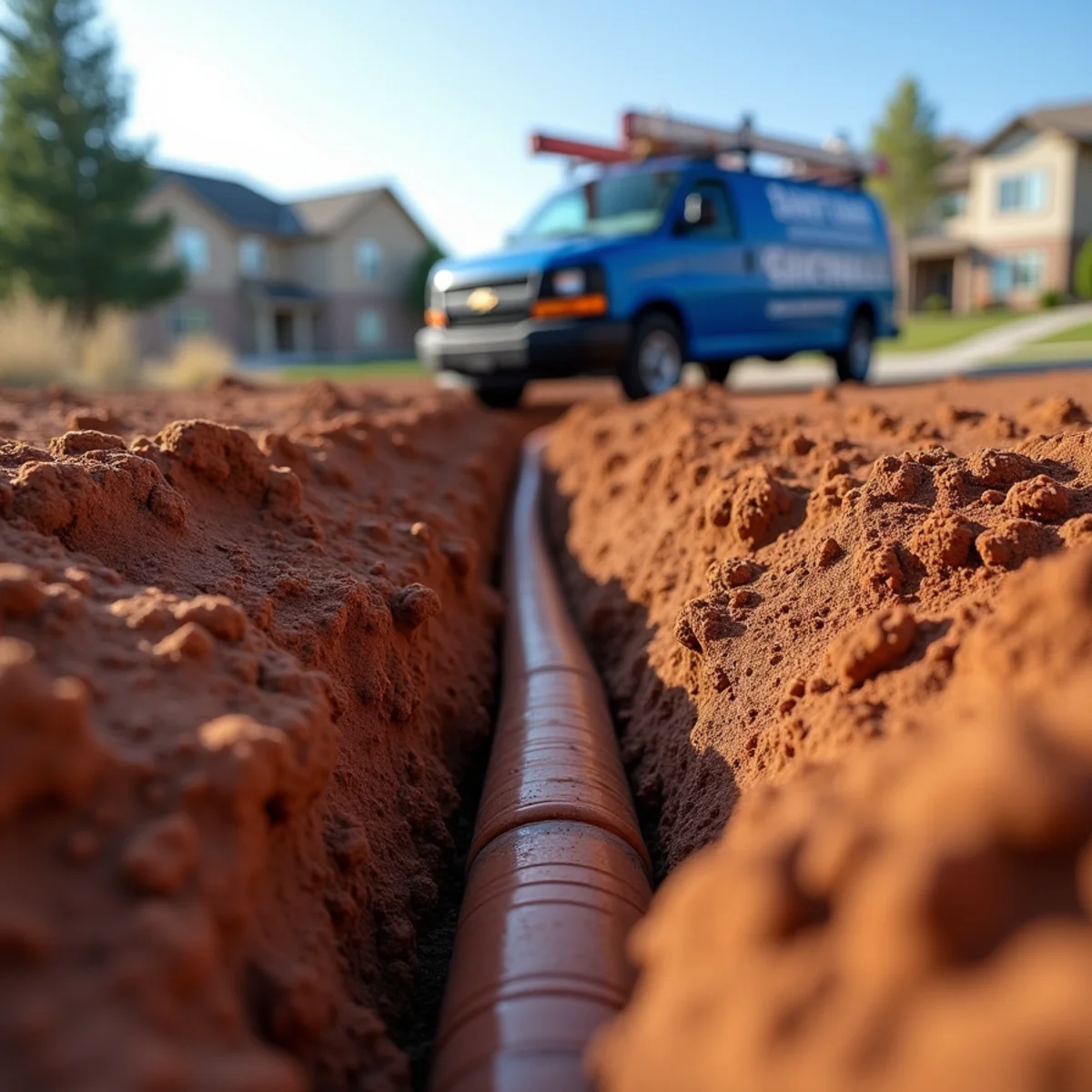
Much of Arapahoe County, including Englewood and neighboring Aurora, sits on expansive clay soil. It is one of the defining features of building and living on the Front Range. This clay swells when it gets wet and shrinks when it dries out, and that movement never really stops. It works on foundations, driveways, and, out of sight, on the sewer line buried in your yard.
A sewer line is supposed to sit at a steady, gentle downhill slope so waste flows away by gravity. When the soil around it keeps moving, that slope gets disturbed. Understanding how expansive clay affects a sewer line helps you read the early warning signs before a slow problem becomes a backup in your basement.
Why Front Range clay soil moves so much
Expansive clay contains minerals that absorb water and expand, sometimes dramatically. When our dry Colorado climate bakes the ground, the clay contracts and pulls away from whatever it surrounds. When we get a wet spring, snowmelt, or a heavy monsoon storm, it soaks up moisture and pushes outward with real force.
That cycle of swelling and shrinking creates constant pressure and shifting underground. Structures respond to it, which is why so many homes here have foundation and drainage systems designed around expansive soil. Your sewer line, buried in the same ground, is subject to the exact same forces.
How clay soil damages a sewer line
The movement affects a sewer line in several ways, and older lines are the most vulnerable.
- Shifting soil can push pipe joints apart, creating gaps where waste leaks out and roots and soil get in
- Uneven settling creates low spots, called bellies, where waste and solids collect instead of flowing through
- The stress can crack or break older, brittle clay tile and cast-iron pipe outright
- Offset joints and cracks invite tree roots, which are drawn to the moisture and nutrients and then grow into and block the line
- Repeated movement can misalign a repair or connection that was solid when it was installed
Older pipe materials make it worse
Many established Arapahoe County neighborhoods still have their original sewer laterals, and the material matters. Vitrified clay tile pipe, common in homes built decades ago, comes in short sections with joints every few feet. Every one of those joints is a potential weak point when the soil shifts. Clay pipe is also brittle and cracks under stress.
Cast-iron lines corrode from the inside over the years, thinning and roughening so debris catches more easily. Older Orangeburg pipe, made from compressed fibers, can deform and collapse. When you combine any of these aging materials with expansive soil that keeps moving, failures become a question of when, not if.
The warning signs to watch for
Sewer line trouble rarely appears out of nowhere. It usually announces itself with small symptoms that get worse over time. Catching them early is the difference between a targeted repair and a full-blown backup.
- Drains that are slow throughout the house, not just at one fixture
- Gurgling sounds from drains or toilets when water runs elsewhere
- Sewage odors in the yard, basement, or around floor drains
- Water or sewage backing up into the lowest drains during heavy use
- Unusually lush, green patches or soggy spots in the yard over the sewer line
- Repeated clogs that keep coming back after being cleared
How a camera inspection finds the real problem
Guessing at a buried sewer line wastes time and money. The right first step is a sewer camera inspection, where a plumber runs a waterproof camera down the line to see exactly what is happening: a crack, an offset joint, a belly, a root intrusion, or a collapse. As a regional estimate, a camera inspection in the Denver metro typically runs somewhere in the range of $125 to $350, and it tells you precisely where and how bad the damage is.
That clarity matters because the fix depends entirely on the diagnosis. A single root intrusion is a very different job from a line that has cracked and settled along its whole length. A camera turns a guessing game into a plan.
Repair options for a damaged sewer line
Once the problem is located, there are a few paths forward depending on the condition of the line and the soil around it.
- 1
Cleaning and root removal
If the line is structurally sound but blocked by roots or buildup, mechanical cleaning or hydro jetting can clear it and restore flow.
- 2
Spot repair
A single cracked or offset section can sometimes be dug up and replaced without disturbing the entire run.
- 3
Trenchless repair
Where conditions allow, methods like pipe lining or pipe bursting can rehabilitate or replace the line with minimal digging, which is easier on your yard.
- 4
Full replacement
A line that has broken up or settled badly across its length may need to be excavated and replaced, ideally with modern pipe that handles soil movement better than old clay tile.
Can you prevent clay soil damage?
You cannot stop the soil from moving, but you can reduce the stress on your line and catch problems early. Keeping moisture around the foundation and yard as consistent as possible helps, since it is the extreme swings between bone-dry and saturated that cause the worst movement. Grade the yard to move water away from the house, keep gutters and downspouts directing water well away, and avoid planting trees with aggressive roots near the sewer line.
For an older home, a periodic camera inspection is cheap insurance. Finding a small crack or a minor root intrusion early lets you handle it on your schedule instead of during a sewage backup.
When to call an Englewood plumber
If you have slow drains throughout the house, recurring clogs, sewage odors, or a soggy patch in the yard, do not wait for a backup. A plumber can run a camera to find the exact problem, clear roots, and repair or replace the damaged line, and advise on the best approach for the expansive soil around your Englewood or Aurora home.
Englewood Plumbing Pros handles sewer line repair and sewer backup cleanup throughout Arapahoe County, including camera inspections and trenchless options. When your sewer line is fighting the clay soil, call us at (831) 290-4327.
Frequently Asked Questions
Clay swells when wet and shrinks when dry, and that constant movement pushes pipe joints apart, creates low spots called bellies, and cracks brittle older pipe. The gaps then let in tree roots and soil, which cause blockages and backups over time.