
Englewood Plumbing Pros
Annual Water Heater Maintenance Checklist
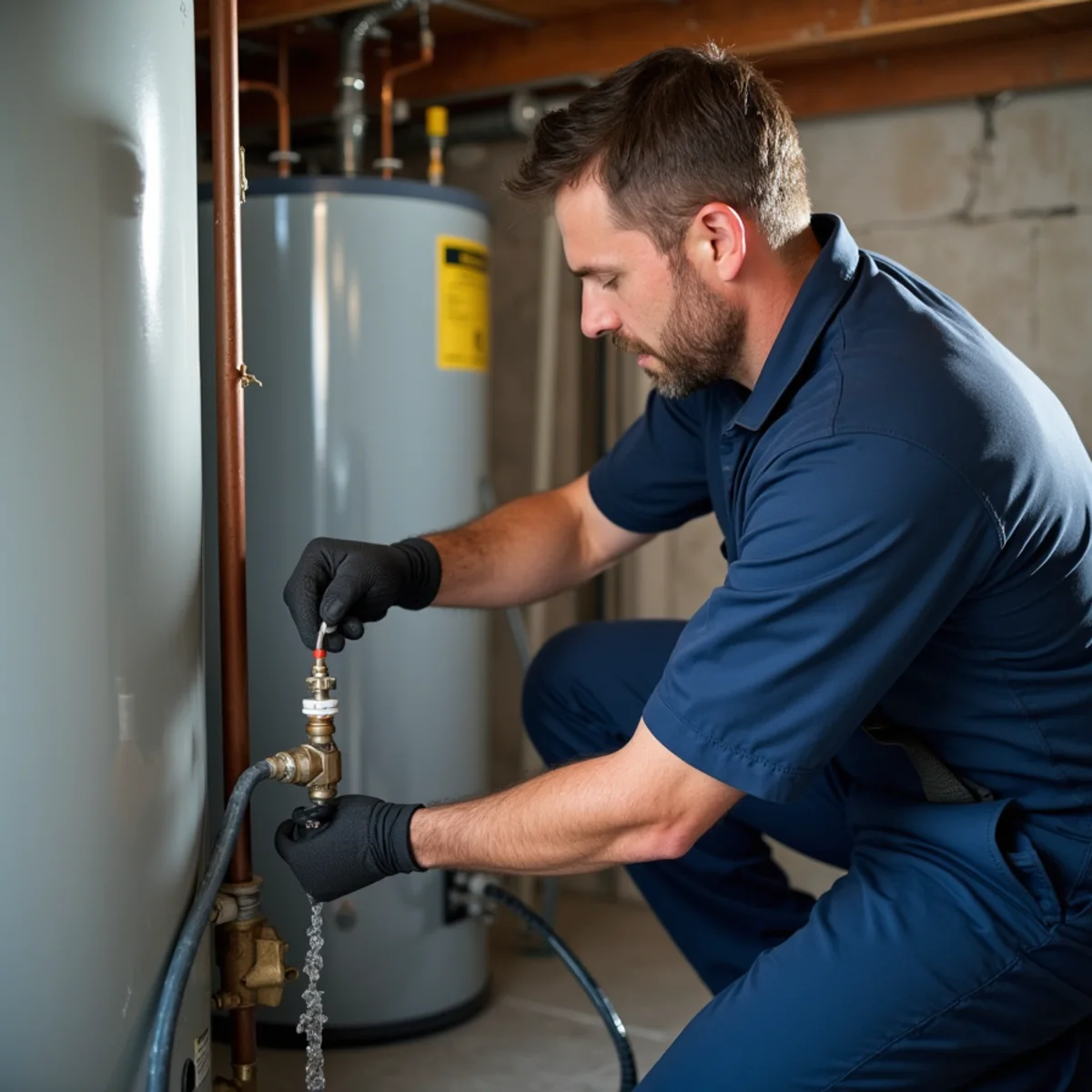
A water heater is one of the hardest-working appliances in your home, and one of the most ignored. It runs quietly in a corner of the basement or garage until the day it stops, usually right when you need a hot shower. Most premature failures are not bad luck. They come from sediment, corrosion, and worn parts that a little annual attention would have caught.
Here in the Denver metro, hard water makes maintenance matter even more, because dissolved minerals settle out and build up inside the tank. This checklist walks Centennial and Front Range homeowners through the annual tasks that keep a water heater running efficiently and add years to its life. Some steps are simple DIY; others are best left to a plumber.
Flush the tank to remove sediment
This is the single most important maintenance task, especially with our hard water. Every time the heater runs, minerals settle to the bottom of the tank as sediment. Left alone, that layer insulates the water from the burner or heating element, so the heater works harder, costs more to run, and wears out faster. On gas tanks, sediment causes the rumbling and popping many homeowners hear.
- 1
Turn off the power or gas
Switch an electric heater off at the breaker, or set a gas heater to pilot or vacation mode. Never drain a tank with the burner or elements active.
- 2
Shut off the cold water supply
Close the cold-water valve feeding the tank.
- 3
Connect a hose and drain
Attach a garden hose to the drain valve at the bottom, run it to a floor drain or outside, and open the valve. Opening a hot-water faucet in the house helps it drain.
- 4
Flush until clear
Let the water run until it comes out clear rather than cloudy or full of grit. Briefly reopening the cold supply can help stir up and rinse out stubborn sediment.
- 5
Refill and restore power
Close the drain, remove the hose, reopen the cold supply, and let the tank fill completely before turning the power or gas back on.
Test the temperature and pressure relief valve
The temperature and pressure relief valve, often called the T&P valve, is a critical safety device. If pressure or temperature inside the tank climbs too high, it opens to release it and prevent a dangerous failure. A valve that is stuck from years of mineral buildup cannot do its job.
To test it, place a bucket under the discharge pipe and lift the valve's lever partway so a little water flushes through, then let it snap back. You should hear and see water release and then stop cleanly. If nothing comes out, or it drips continuously afterward, the valve needs to be replaced. This is a safety item worth handling promptly.
Check the anode rod
The anode rod is a quiet hero inside the tank. It is a metal rod designed to corrode in place of the tank itself, sacrificing itself so the steel lining does not rust through. Once the anode is used up, the tank begins to corrode, which is what eventually leads to leaks and failure.
Inspecting or replacing the anode rod every few years, and checking it as part of annual maintenance, can significantly extend a water heater's life. In hard-water areas the rod wears out faster. Checking it involves partially draining the tank and unthreading the rod, so many homeowners have a plumber handle this along with the flush.
Set the temperature correctly
The right water temperature balances comfort, safety, and cost. A setting around 120 degrees is generally recommended. It is hot enough for everyday needs and to discourage bacteria growth, while low enough to reduce scald risk and save energy.
A setting much higher than that wastes energy, accelerates mineral buildup and tank wear, and raises the danger of scalding, which matters in homes with young children or older adults. If you are not sure of your setting, check the thermostat dial or, for more accuracy, run the hot water and measure it at a faucet.
Inspect for leaks, corrosion, and clearances
A visual once-over each year catches small problems before they become emergencies. You are looking for early signs that the tank or its connections are failing.
- Moisture, rust, or mineral crust around the tank base and fittings
- Corrosion on the water and gas connections
- Signs of rust on the tank itself, which often means the interior is failing
- A clear area around the unit, with no stored items crowding a gas heater's air supply
- A properly sloped and unobstructed flue on a gas water heater
- A drain pan under the tank that is intact and draining where one is installed
Do not forget tankless units
Tankless water heaters skip the storage tank, but they are not maintenance-free, and hard water is their main enemy. Minerals build up inside the heat exchanger and gradually reduce flow and efficiency, and can trigger error codes if ignored.
A tankless unit should be flushed with a descaling solution about once a year, or more often with very hard water, to keep the heat exchanger clear. Many models also have an inlet filter that should be cleaned periodically. Following the maintenance keeps the unit running efficiently and protects the warranty on many models.
Know when a heater is near the end
Maintenance extends life, but no water heater lasts forever. A traditional tank commonly lasts around eight to twelve years, and tankless units can last longer with care. If yours is in that range and showing rust on the tank, leaking, or not keeping up with demand, it may be time to plan a replacement rather than keep repairing it.
As a regional estimate for the Denver metro, replacing a standard tank water heater typically runs somewhere in the range of $1,150 to $2,500, and a tankless unit roughly $2,500 to $5,000 depending on the model and installation. Planning the swap on your schedule beats an emergency replacement when the old one floods.
When to call an Englewood plumber
If your water heater is rumbling, running out of hot water, showing rust, or simply overdue for service, a plumber can flush it, test the safety valve, check the anode rod, and tell you honestly whether it has years left or is due for replacement. Handling maintenance and repairs before a failure saves you the cost and mess of a leaking tank.
Englewood Plumbing Pros services and replaces water heaters throughout Englewood, Centennial, and the Denver metro, for both tank and tankless units. To keep your hot water reliable, call us at (831) 290-4327.
Frequently Asked Questions
Once a year is a good rule, and it matters even more in the Denver metro because our hard water leaves heavy sediment. Flushing clears that buildup before it insulates the burner or element, which keeps the heater efficient and helps it last longer.