
Englewood Plumbing Pros
Signs Your Sewer Line Is Failing
Your sewer line does its job silently underground, which is exactly why trouble often goes unnoticed until it becomes a backup in your basement. But a failing line almost always gives warning signs first. Catch them early and you may handle the problem with a cleaning or a spot repair instead of a full, costly replacement after it collapses.
This guide covers the signs a sewer line is failing, why lines fail so often on the Front Range, and what a camera inspection can tell you. If you own an older home in Wheat Ridge or anywhere around Arapahoe County, these are the symptoms to keep an eye on.
Warning signs you can spot inside
The clearest early warnings show up at your drains and fixtures. A single slow drain is usually a local clog, but when several drains slow down together, or you hear and smell things you should not, the problem is likely in the main sewer line serving the whole house.
Watch for these indoor signs, and note whether more than one fixture is involved, which is the key clue that it is the main line rather than a single drain.
- Multiple drains slow or backing up at the same time
- Gurgling sounds from toilets or drains when you run water elsewhere
- Sewage odor indoors or near floor drains
- Water backing up in a tub or shower when you flush the toilet
- Repeated clogs that return no matter how often you clear them
Warning signs in your yard
A failing sewer line often shows above ground too, because the line runs under your yard from the house to the street. Leaking wastewater changes the ground around it, and a collapse changes the surface.
Look for a patch of lawn that is unusually green, lush, or soggy compared with the rest; escaping wastewater acts like fertilizer. A foul smell outdoors near the line, an unexplained dip or sinkhole in the yard, or a sudden rise in your water bill can all point to a broken line leaking underground. Some homeowners also notice more pests, which are drawn to the moisture and waste.
- A patch of lawn that is greener, lusher, or soggier than the rest
- Sewage odor outdoors along the path of the line
- A dip, depression, or sinkhole forming in the yard
- An unexplained spike in your water bill
Why sewer lines fail on the Front Range
Our region is tough on sewer lines for a few specific reasons. First, many Englewood-area homes were built with clay or cast-iron sewer pipe that is now decades old. Clay comes in short sections with joints at every connection, and those joints are exactly where tree roots find their way in.
Roots are the number one enemy of an older line. They seek the water and nutrients inside, infiltrate the joints, and grow into a mat that snags waste and eventually cracks the pipe. On top of that, our expansive clay soil swells and shrinks with moisture, which shifts the pipe over the years and can cause it to sag into a belly, crack, or separate at a joint. Old cast iron also corrodes and scales from the inside until it fails.
- Tree roots infiltrating joints in old clay and cast-iron pipe
- Expansive clay soil shifting and stressing the line
- Bellied or sagging sections where waste collects
- Corrosion and internal scaling in aging cast iron
How a camera inspection tells you the truth
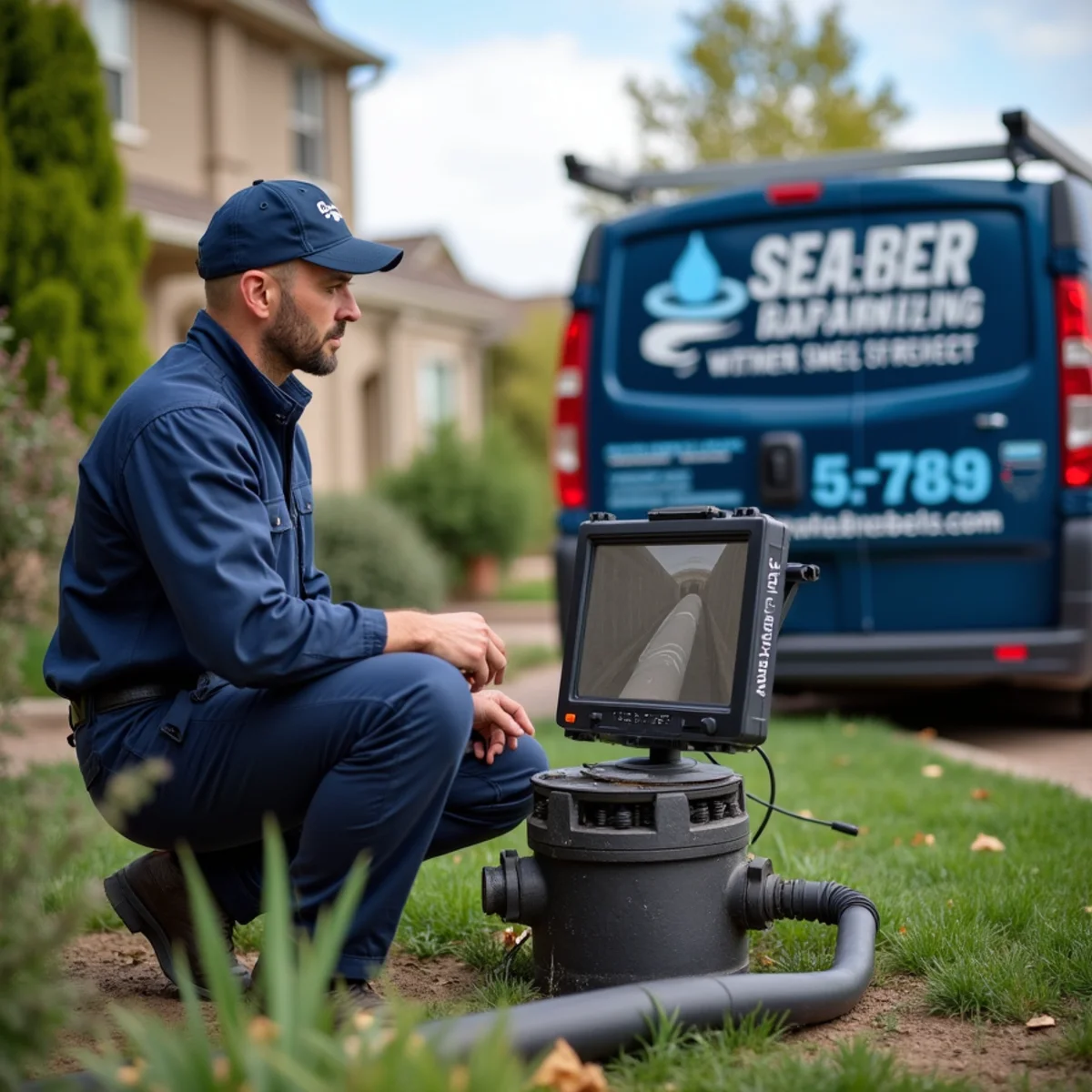
The only way to know for certain what is happening inside your sewer line is to look. A sewer camera inspection sends a waterproof camera down the line and shows exactly what is going on: roots, cracks, a belly holding water, a separated joint, or a full collapse.
As a regional estimate, a camera inspection runs roughly $125 to $350, and it is money well spent when you are seeing warning signs. It turns guesswork into a clear picture, so you fix the actual problem instead of paying to clear the same clog again and again. It is also smart before buying an older home.
Repair options once you know the problem
What happens next depends on what the camera finds. A minor root intrusion or grease buildup may only need professional cleaning, sometimes with a cutter or hydro jetting, to restore flow. A single damaged section might be handled with a spot repair.
More extensive damage, such as a collapsed or badly bellied line, calls for replacement, and in many cases trenchless methods can rehabilitate or replace the line with far less digging than the old dig-up-the-whole-yard approach. The point is that catching it early usually means smaller, cheaper options are still on the table.
When to call an Englewood plumber
If you are seeing any of these signs, do not wait for a full backup to force the issue. A sewer line rarely gets better on its own, and a slow leak underground can undermine your yard or foundation. Getting a camera down the line early gives you the most options and the lowest cost.
Englewood Plumbing Pros provides sewer line repair and drain cleaning throughout Englewood and Wheat Ridge, including camera inspections that show you exactly what is happening underground. If your drains, yard, or water bill are sending warning signs, call us at (831) 290-4327.
Frequently Asked Questions
Often it is multiple drains slowing or backing up at once, along with gurgling toilets and a sewage smell. A single slow drain is usually a local clog; several at once points to the main line.